Showing posts with label old car. Show all posts

Tuesday, December 30, 2014

Happy motoring in 2015!


If you are the proud owner of a well-loved, well-used classic car, I hope you used it a lot this past year and didn't just think of it as your best investment. You’ve got to use them. If you don’t, they just become objects d’art, half the appeal has gone and they get very unreliable. And people love to see them on the road; they've come up and asked me so many questions this past year, I could barely get out at times.

Think of our roads, if you like, as one long ribbon of showcases for moving objects of desire. My message to all those rich investors out there is simple: share the love of motoring!

Happy New Year!

- by Be For

Saturday, December 27, 2014

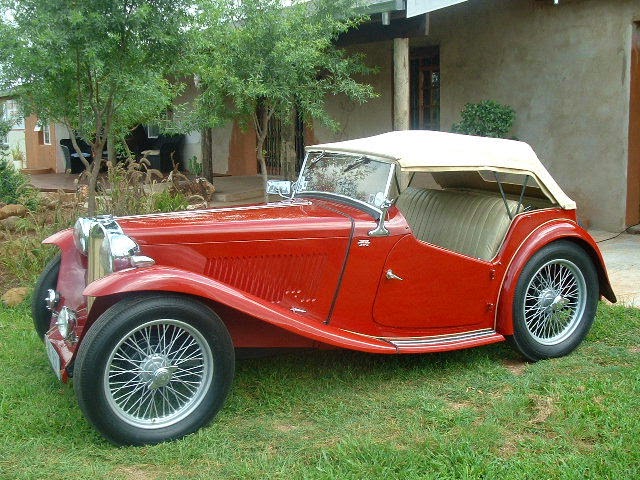
Car of the Month December 2014 is the MG TC/TD/TF

To get back into production quickly after the Second Word War, MG of Abingdon, Oxfordshire, had no option but to warm up its pre-war model, the TB. Thus the TC of 1945 had the same big 19in (48cm) wheels, fold-flat screen, crude semi-elliptic suspension and slab-tank body with ash framing. The body was wider now to give more elbow room for its passengers, while synchromesh on second, third and top gear made it more pleasant to drive. Hydraulic brakes were another welcome improvement.


1949 MG TC

Traditionalists loved it: it was nippy - 78mph (125kph) flat-out - and fun to drive. Nobody seemed to mind the heavy steering and rock-hard suspension. US servicemen stationed in the UK loved them so much they took them home and gave Americans a taste they never lost for European sports cars. Soon the C was spearheading an export drive to the USA - and that's where most of the 10,000-car production run ended up.

Charming as it was, the out-dated TC couldn't go on for ever, so fir 1949 MG introduced the TD: same chassis, same 1250cc four-cylinder engine, but with the new independent front suspension and the rack-and-pinion steering of the YA. Bumpers front and rear and smaller disc wheel didn't do much for the looks, but the TD was roomier and slightly faster, especially in higher compression MKII form from 1952. The TD was a big seller, racking up 29,664 units in its four-year production run.


1954 MG TD

The MG TD MK.II

The final flowering of the traditional MG was the TF of 1953. 

By moulding the headlamps into the front wings, which sloped the grill and fuel tank, Abingdon had gently modernised the shape. Inside, there were individual front seats and a re-styled dashboard. Early cars had the 1250cc engine, but from 1954, a 1500cc unit, giving 63bhp restored some of the performance.

The TF was a holding operation until the MGA appeared The TF looked what it was - warmed-up left-overs - and was really a holding operation while Abingdon prepared its first modern post-war model, the MGA of 1955. Ironically, the TF is the most sought-after of the three "square-rigger" post-war MG's.

MG TC/TD/TF - 1945 - 1955
ENGINE - In-line four
CAPACITY - 1250cc/1466cc
POWER - 54-63bhp
TRANSMISSION - 4-speed manual
TOP SPEED - 78-86mph (125-138kph)
NO. BUILT - 10,000 TC 29,644 TD 9,800 TF

The TD of 1949 was the first MG sports car to have the independent suspension system 

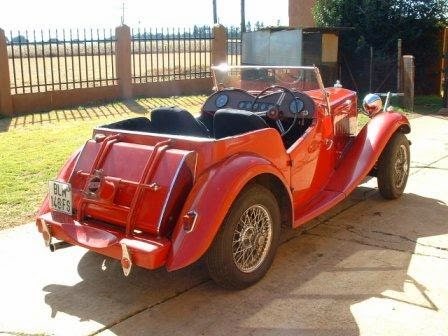
 1954 MG TD - rear

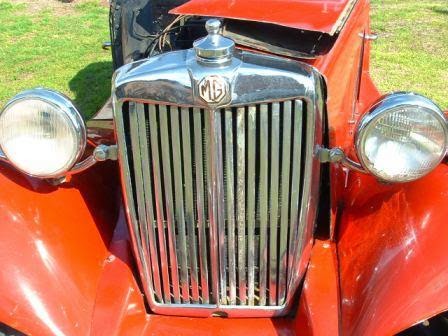
1954 MG TD - grill

1954 MG TD - rear

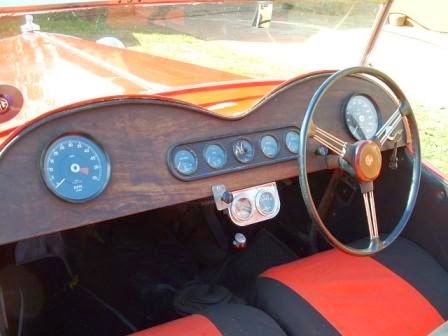
1954 MG TD - interior

1954 MG TD - interior

1954 MG TD - side view

::

- by Be For

Monday, November 24, 2014

1964 MGB Roadster


Just arrived - 1964 MGB Roadster, very rare pull-handle model, not code 2 or 3, uninterrupted paper trail since 01-01-1965, five 60-spoke painted spoke wheels, new tyres, up-rated 5-main bearing motor plus over-drive. Fitted with new soft top, boot carrier, chrome bumper. Red body, black upholstery with red piping, black mats. Been garaged all it's life, totally original. Needs a bit of TLC. For sale - Contact Dave +27 83 625 4445 or contact me via the CONTACT FORM on the right side of this page.


Out of the blue came this 1964, very rare, pull-handle MGB Roadster from a chap in Port Alfred. After chatting to him, I bought the car over the phone without seeing it. When it arrived, it was true to spec in an unmolested condition. the paper work is unmolested since 01-01-1965, with the last owner having had the car for the past 15 years. After examining the car and taking same for a drive as soon as it arrived, I was amazed at the performance of this almost 60-year-old car, as only the British can produce!


Road-holding is absolutely true to style for a car of the period and a tribute to past motoring.

Engine 1798cc, high compression, aluminium tappet cover and sump, pancake air cleaners, over-drive, twin SU's, modern alternator, 5-main bearing engine


::

- by Be For

Wednesday, November 19, 2014

Car of the month November 2014 - Rolls Royce


The Cloud had everything the traditional Rolls Royce buyer
could have wanted - except perhaps ultimate power in
Series I form. This is a rare H.J. Mulliner convertible.

The Rolls-Royce Siler Cloud and the virtually identical Bentley S-Type were revealed in 1955. Beautifully proportioned, exquisitely constructed and near-silent in operation, they were everything the traditional Rolls buyer could have hoped for.


This was Crewe's second "standard steel" car after the post-war Dawn and R-Type, with an off-the peg factory body rather than a made-to-measure, hand-crafted aluminium item in the pre-war tradition. Mulliner Park Ward, James Young and others all built exquisite special bodies on this chassis, and there was a long-wheelbase version of the standard body with an extra four inches (10cm) of rear leg room and a division.

Park Ward's famous Chinese Eye Continental, here in convertible form - the ultimate in open car luxury.

The traditional Rolls and Bentley radiator grilles were retained - these and a few badges and items on insignia were the only differences between the two otherwise identical cars. They rode on a substantial, and resolutely separate, traditional box-section chassis with independent front suspension and rear damper rates that could be altered from the driving seat to suit whatever type of road you were thinking of taking your Bentley or Rolls down.

The interior was nothing if not luxurious, with superbly crafted leather seats and a magnificent walnut dashboard.


The engine in the Cloud and S1 was basically the same 4.9-litre power unit carried over from the previous R-Type (and Silver Dawn). except that it had a new aluminium cylinder head and twin SU carburetors.

The Cloud as it appeared in 1955 with single headlights and a six-cylinder engine.
The V-eight Cloud II looked identical.

Transmission at the start offered a choice of either four-speed synchromeshed manual or four-speed Hydramatic automatic, manufactured under licence by Rolls from General Motors in the U.S.A. In fact, after just 18 months, the manual option was dropped and Rolls never encouraged owners to order it anyway. While the engine was incredibly refined, it wasn't really that powerful - the maximum speed was 106mph (170kph). It was Rolls-Royce's policy never to reveal specific power outputs, but the estimated 178bhp had 40cwt (2032kg) to pull along.

For lightness, the body of the Continental models was finished in aluminium;
the factory saloon came in steel only.

To own and drive a Rolls is a satisfying and ethereal experience as long as you don't want blistering performance and can afford the expensive maintenance. These days, it's cheaper to buy, but costly to restore.

The HJ Mulliner convertible, heavier, but just as beautiful as the Continental versions.

ROLLS-ROYCE SILVER CLOUD AND BENTLEY S-SERIES (1959 - 65)
ENGINE : Straight six and V-eight
CAPACITY : 4887/6230cc
  TRANSMISSION :4-speed manual / 4-speed auto
  TOP SPEED :106-116mph (170-186kph)
  NO. BUILT :
  Cloud 1/S1 - 3,107/2,231
  Cloud 2/S2 - 2,417/1,932
  Cloud 3/S3 - 2,044/1,318
  Plus 671 Clouds I, II, III

.

- by Be For

Sunday, July 13, 2014

Almost at the end of winter

The first rains are not far away and farming will soon be starting in all earnest. Tractors are being prepared for serious work and lands are being prepared and ploughed, ready for this season's crops. Those of you who are farmers, may this be a bumper year!

I'm sure all you car enthusiasts have been busy and resourceful in the detail and attention given to your beloved classics over the winter months, and are ready and raring for the coming summer months outings.

Many years ago, in the 1970's, I was at an Austin Healey show day at Patterson Park in Norwood and was impressed with a red Healey 3000 tri-carb on exhibit. My heart raced with excitement and I swore that one day I would own one of those, come what may!

1962 Austin Healey 3000 MKII

A couple of years ago I heard of one of these beauties for sale in Cape Town and without seeing it, bought it over the phone and had it sent up to Jo'burg on a roll-back. You can imagine my anticipation when it arrived a couple of days later - British Racing Green with black Leather and white piping interior - immaculate condition - an ABSOLUTE dream! 

72-spoke chrome wires, detailed engine bay and even a leather Tourneau! Magnificent! Had been a no-expense-spared rebuild back to standard in the U.K. and shipped to Cape Town by the previous owner.


As it came of the roll-back, I fired the motor and boy oh boy! talk about 3 SU growl - the sound is incomparable!

You can imagine that, in 1962, nobody could tune the 3 carbs, so Austin Healey went back to 2 carbs - the E-type proved the rest about 3 carbs.


In my mind, Austin Healey was one of the greatest sports cars ever produced.

Here is a test to find out whether your mission in life is complete.
If you're alive, it isn't.
- Richard Bach

Featured Short Story - (author unknown)

 
The inventor Arthur Davidson, of the Harley Davidson Motorcycle Corporation, died and went to heaven. At the gates, St. Peter told Arthur, "Since you've been such a good man and your motorcycles have changed the world, your reward is that you can hang out with anyone you want in Heaven."

Arthur thought about it for a minute and then said, "I want to hang out with God."

St. Peter took Arthur to the Throne Room, and introduced him to God. Arthur then asked God, "Hey, aren't you the inventor of woman? God said, "Ah, yes…"

"Well, " said Arthur, "professional to professional, you have some major design flaws in your invention :

1) There's too much inconsistency in the front-end protrusion.
2) It chatters constantly at high speeds.
3) Most of the rear ends are too soft and wobble too much.
4) The intake is placed way to close to the exhaust and
5) The maintenance costs are outrageous!"

"Hmmmm, you may have some good points there," replied, God, "hold on."God went to his Celestial super computer, typed in a few words and waited for the results. The computer printed out a small slip of paper and God read it.

"Well, it may be true that my invention is flawed," God said to Arthur, "but according to these numbers, more men are riding my invention than yours!"

The less said about that the better. (Extract from 'The World Encyclopedia of Cars')

Go well everybody and happy motoring!

Till next time, Dave

.

- by Be For

Friday, June 27, 2014

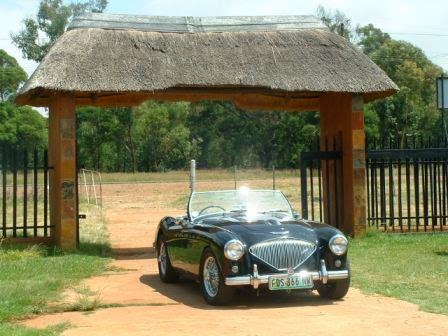
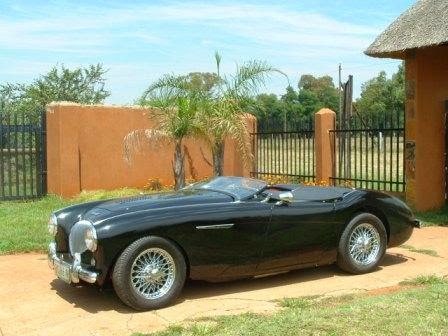
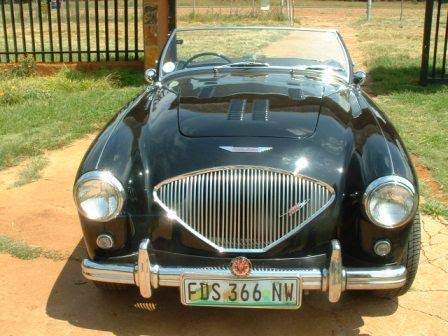
Car of the month - June 2014 - 1953 Austin Healey BN1 100-4 2-seater


After expectantly waiting for 3 weeks for delivery of a 1953 Austin Haley BN1, it finally arrived in all its glory! Black with black leather interior and chrome wire wheels, it's a beaut!

In 1953, this Austin Healey was exported from the factory at Longbridge, Birmingham, UK, to California, USA and was brought back to South Africa in 1985, where it stood in a workshop for 12 years waiting for restoration.

It was bought by a sympathetic enthusiast and lovingly restored to its former glory, finally being finished in 2003 with Black paint and Cherry leather interior, chrome wire wheels and a modern 5-speed gearbox

 It was crowned a Concourse car in its club in Klerksdorp for several years and enjoyed a loving home with several other Austin Healeys, until now finally being acquired by us in March 2009.

Austin Healey with windscreen in normal position

 Austin Healey with windscreen in racing position

1953 Austin Healey Side View

1953 Austin Healey Side/rear view.

1953 Austin Healey grill

Trying out the seating!

Front view

 Austin Healey Sprite, 1953 Austin Healey BN1 and Tiger Moth

NAME : Austin Healey BN4 (1953-56)
ENGINE : In-line 4
CAPACITY : 2600cc
POWER : 100bhp
TRANSMISSION : 3-speed + over-drive
TOP SPEED : 100mph (160kph)

Production was from 1953 - 1956, when it was replaced by the BN4 100-6.

.

- by Be For

Friday, May 9, 2014

1969 Jaguar E-Type 4.2 Series II Coupe


This particular model is Olde English White with Black leather interior, wooden steering wheel and Chrome Wires. This car was found in good nick with its tool-kit, jack, lead hammer and tool for knock-ons.

There has been a huge upswing in the classic and vintage car market recently - prices have sky-rocketed and available stock is becoming more and more scarce. I would imagine a great factor is the fact that a lot of our stock is grabbed up by overseas collectors due to the fact of our vehicles being largely rust free and as the rand weakened and greater prices were realised overseas, many of our cars are being exported.

 One of the greatest of all British sports cars ever to be manufactured (and this fact is supported by the many conversions and build-up kits being offered to the enthusiast), was the Jaguar E-Type - (Roadster in particular, as far as I'm concerned) and it was an instant classic, an exercise in cool, aerodynamic theory and unashamed showmanship, producing probably the most beautiful sports car of the 60's.`

From the outside, the 3.8 and 4.2 Series I E-Types are had to tell apart, but the bucket seats are a giveaway : this one below is a 3.8 roadster.


Below: The Series I and Series II compared - the later car has open headlights to comply with American safety regulations.


It had the ability to live up to it's looks, too. The 150mph (241kph) that Jaguar claimed for the E-Type was devastatingly quick in 1961 (in reality, only the tweaked-up press cars could achieve it, and 140 (225) was nearer the truth), making the new Jaguar Britain's fastest production car. Better still, it was probably Britain's greatest bargain price-wise, undercutting its nearest rival, the Aston Martin DB4, by a third.

That curvy shell, inspired by the Le Mans-winning D-Type racer, was immensely stiff - all the better to take advantage of it s new wishbone and coil-spring independent rear suspension.

Combining near-limousine ride comfort with vice-like grip, even on the slender cross-ply tyres that looked like something off a bike to modern eyes, the new Jaguar handled superbly. Providing the power was the 3.8litre XK engine, already 13 years old but still well worthy of the new chassis.

The same couldn't be said of the elderly, slow-shifting Moss gearbox, a feature of all Jaguars since the 1930's or the disc brakes that were spoilt by an uncertain-feeling pedal.

Pop stars, racing drivers and royalty jostled for position in an ever-lengthening waiting list for the car. Lew Grade wanted to borrow one for his new British TV series, The Saint, but Jaguar turned him down - they could sell every car they could make.

 Despite the demand, development continued. The bigger 4.2 engine from 1964 was torquier and and came with a much better gearbox and brakes. Seats and trim improved, as did the electrics, making the 3,2 Series I E's the best of the bunch. Appeals for a roomier car were met by a two-plus-two version in 1966 and there was even an automatic, as Jaguar tried to reconcile the E's performance image with a need to increase sales in America.

The E-Type's design found a place in the Museum of Modern Art and is sensual rather than sexy, for the car was designed from the heart and the world has been in love with it from the start!

Below : On the open road, the E-Type was good for over 140mph (225kph). The car in front is an early Series I 3.8 Roadster, behind is a Series II Coupe. 


.

- by Be For

Monday, April 28, 2014

Car of the month April 2014 - Bugatti Type 35B


The Bugatti Type 35B - The rawest thrill that is road-legal - once you've heard the tearing-calico exhaust note that is a blown 35 at full rip, you'll yearn to drive one.

The straight-eight is a cacophony of aural delight, with each sound individually identifiable by its timbre even to the tone-deaf: valves chime, chains sing; revs howl and the b lower shrieks once the car's running past the fouled-plugs stage, and the outside gear-change works as fast as you can move it. this is a Grand Prix racer - 1926 world championship winner - and looks like a million bucks, which is what they cost now!

All Bugattis are handsome, but the 35 is a work of art, the square-cut engine castings contrasting with the elegant arch of the horse-shoe grille, the beautiful detail of the engine-turned dash and zig-zag wired body panels - and the Heath Robinson arrangement of chains, sprockets and cables that constitutes the brake linkages.


Ettore Bugatti ploughed his own furrow through life and that came to making his idiosyncratic automobiles, manifested in the exquisitely sculpted hollow front axle (whose springs pass right through the tube), the cast-alloy wheels with integral iron brake drums, the roller bearings hidden away in the crankcase - and the complex opening arrangements for the three-valve-per-cylinder valve gear. All with no gaskets...

William Grover-Williams' Type 35 beat 15 cars to win the inaugural Monaco Grand Prix in 1929, kicking up dust for a gruelling four hours and 100 laps. It was worth it though... Williams was 100,000 francs better-off - 1000 francs per lap.

BUGATTI TYPE 35B 1924-1929
SPECIFICATIONS
ENGINE - 2262cc Eight-cylinder
POWER - 140 bhp
PERFORMANCE - Top speed : 120mph - 0-60mph : 6sec
FUEL CONSUMPTION - 20mpg

Following the Second World War, Etorre Bugatti's fabulously engineered, but vastly expensive creations, were at odds with the times, and production never really restarted. There were many attempts to revive the name, but none was very convincing - until a man called Roman Artioli stepped into the arena. This canny Italian magnate managed to rekindle the Bugatti magic in spectacular fashion, but ultimately the dream prove over-ambitious and ended in bankruptcy.

THE PLAN WAS GRAND : a state-of-the-art factory was built in northern Italy, industry greats were hired (including Paolo Stanzani as technical director and Marcello Gandini as designer - both of them effectively fired later on), and a brand-new V-twelve engine was created from scratch.

The new BUGATTI EB110 was to be a superlative mid-engined super-car, the sort of car that Ettore would have been making if he were still alive. The EB110 name was chosen as a composite of Ettore Bugatti's initials and the fact that the car was to be launched on the 110th anniversary of his birth.


The aluminium-bodied Bugatti's styling (created by an Italian architect) was dramatic but controversial: the lines were hardly harmonious and the traditional Bugatti horseshoe grille looked almost farcically small on the car's nose. Inside, meanwhile, the lever of finish was superb, and equipment levels were generous, but space was severely limited.

Mechanically, the Bugatti was highly advanced. Its centre-piece was a V-0twelve engine fitted with no less than four turbo-chargers and 60 valves, developing 553bhp. There was a six-speed gearbox mated to a four-wheel-drive system and suspension, which delivered handling akin to a grown-up Lancia Inegrale. Bugatti claimed a top speed of 212mph (341kph) and stated that this was the fastest road car in the world; Jaguar with its XJ220 and McLaren with the F1 might have questioned this, but no one was in any doubt that the Bugatti was an extraordinarily fast and very capable machine. .....

BUGATTI EB110 (1991-95)
SPECIFICATIONS
ENGINE - V-twelve-cylinder
CAPACITY - 3500cc
POWER - 553-611bhp
TRANSMISSION - 6-speed
TOP SPEED - 212-221mph (341-356kph)
NO. BUILT - Not known
Info from 'the World Encyclopedia of Cars' - Martin Buckley and Chris Rees

.

- by Be For

Monday, December 30, 2013

Happy New Year 2014!

1953 Austin Healley BN1 100

2013 has been an amazing year filled with some great motoring, club visits, meeting new motoring enthusiasts and checking out some great cars.

Cheers to 2014 and here's wishing you a wonderful and safe motoring 2014!

.

- by Be For

Saturday, August 17, 2013

What is a Classic Car?

1965 Jaguar 3.8 MK.II - British Racing Green

Over the past six months or so there has been a debate in the UK about what constitutes a classic car. This debate is re-visited from time to time, normally either for tax or legal reasons.

It is difficult to know when our cars started to be called classics and some people have it coinciding with the publication of Classic Cars or Classic & SportsCar Magazines. For some people in the UK it relates to the rules on paying Road Tax (Road Fund Licence or Vehicle Excise Duty) – just one of the many ways that our chancellor has of extracting tax revenues from the UK motorist. In what now seems to be the dim and distant past, one of our more enlightened chancellors decided to exempt cars over 25 years old from paying road tax. Interestingly the cars were then classified as ‘Historic’ for tax exemption purposes, rather than classic, but the 25 year rule sort of stuck with many people.

Having said that, the MSA, who organise our own favourite run, the Euroclassic, and used to run a number of other classic car events, including the once famous ‘Norwich Union’, always used 20 years as their cut off point.

Then in 1997 the government changed the 25 year rule for road tax exemption. They obviously calculated that using a rolling 25 year rule, the number of cars that were exempt from road tax would keep increasing and they froze the date, changing the rule to only exempt cars that are ‘pre 1973’.

Every few years some of the car clubs get together and try to get the tax rule changed back to a rolling 25 years, but now that road tax is based on CO2 emissions the government has a ‘green ‘ reason for not changing it as well as a fiscal one, so I don’t think it will ever happen.

So what has kicked off the latest round of the debate? This time it is some proposed changes to the rules governing MOT tests on our vehicles. Currently all UK cars have to be tested once they are 3 years old and then annually (the so called 3-1-1 rule). Across most of Europe the testing regimes are 4 years, then every 2 (4-2-2). For many reasons it makes economic sense for many of our rules to be in line with the rest of Europe, although there is a large xenophobic tendency in the UK that don’t want anything that they perceive to be ‘imposed on us by Brussels’.

Studies have been done to calculate the cost (or savings) of changing the testing rules. Magically some prove that owners will save money, some prove it will cost us money. Other studies predict catastrophe across the motor industry for whom the MOT test, and subsequent repair work are a good source of income.

One suggestion is to exempt cars of a certain age from the MOT test in its entirety, on the basis that our classics are always well looked after, polished and maintained regularly and statistically have been proved to be involved in fewer accident that newer cars. So what date do we pick for classic car MOT exemption: 1960, 1940 or maybe 1920?

When I was young and poor, I regarded the annual MOT as a real pain as it normally found things wrong on the car that I couldn’t afford to fix. Now older, wiser, and not so poor, I believe the MOT is actually an extremely effective way of carrying out a thorough test on a car, for not a lot of money. We have our whole fleet of classic hire cars serviced each year. As they are working cars we never skimp on the maintenance and I tell the garage to replace things that are starting to wear, instead of waiting for them to fail. I have used the same garage for 30 years, so know them, trust them, they are thorough and wouldn’t rip us off.

However, occasionally even after a service, the MOT test has spotted a couple of small things that need fixing that weren’t picked up on the service. Maybe a classic car owner that only drives a few hundred miles a year, may think the MOT is unnecessary or excessive. But road use isn’t the only cause of deterioration. Some components degrade with time. Electrical contacts can oxidise or corrode, rubber deteriorates, brake and clutch fluid absorb water. The reason that England is a ‘green and pleasant land’, is that it rains a lot and not even government bureaucracy can halt the march of the tin worm. So overall I am not keen on changing the frequency of the MOT tests.

Anyway in its infinite wisdom our government has come up with the ideal solution to the problem. They have decided not to do anything at all. So apart from keeping civil servants gainfully employed looking at the pros and cons, and whipping up a storm across the industry and classic car fraternity – nothing will change.

This still leaves us with the question - what is a classic car? Is it 20 years old, 25 years, pre 1973, pre 1960, pre 1940 or what? Is a Morgan a classic whether it was built in 1960 or yesterday?

I have my own favoured definition which comes from our experiences of running The Open Road Classic Car Hire since 1997. We keep having this debate with customers about what they like, why they favour a particular car etc. And it generally comes back to one thing:

A classic car is whatever was around, and you aspired to, envied, or planned to buy, while you were growing up.

This means that it changes from year to year and with each generation of motorists. My favourites are the cars from 1960s and 70s (I was born in 1953). Older customers want cars from the 1950s. Younger customers want cars from the 1980s. I admit that my definition is not ideal for writing Europe wide legislation.

The challenge we all face for the future is keeping the interest of the next generation. The current clutch of 20 and 30 somethings have grown up in a period when the British motor industry no longer makes affordable sports cars (I rule out Jaguars and Astons as not being affordable). Sadly their idea of a classic could encompass anything from a Mazda MX5, Mitsubishi Evo, Subaru, Toyota MR2 or a VW Golf or Scirocco. Not a British Marque in sight.

This article was Tony Merrygold's "Letter from England" published in the May 2012 edition of the American classic car magazine "British Marque". 
- Info from Open Road Classic Car
.

- by Be For

Tuesday, August 13, 2013

The passion for classics

 1953 Austin Healey BN1

There are few, if any, pieces of hardware as emotive as the car. With the birth of car designers rather than pure engineers, the door was open for them to express their visions for the future. These cars are celebrated here as we look back at what fired the imaginations of yesterday's creative minds.

The story of classic and dream cars charts the progress of our own history and experience and these pages are a celebration of that progression and a recognition of the value and importance of these cars in our lives.

AsonMartin O.I. V8

But have you ever thought about owning a TRUE classic? Something that makes your heart race and pumps adrenalin through your body? There is nothing quite like the feeling of owning a one-of-a-kind, hand-built, prestigious, super-car. AND having the added advantage of investing your money in a Solid, ever growing-in-value item.

Like antiques, classic and vintage cars have escalated in value through the decades—like old wine (and women!) they only improve with age. Even a neglected old lady picked up in an old barn somewhere, will reward you with her golden patina during a loving restoration undertaking.

Jaguar XK

Proof of the popularity of these beauties is the number of Classic and Vintage Car Clubs that are in operation in South Africa and throughout the world. These clubs are promoting the on-going interest in these old classics and also offer technical and general knowledge sharing, great get-togethers and outings, not to mention all the ‘noggins’!

If you’ve ever been on a ‘vintage rally’, you will know all about the camaraderie, fun and great experiences that happen on these get-togethers - the helping hands extended when you break down (even if it means them losing their place in the race!), the memories shared over a beer/glass of wine at the picnic tables, great food and great friendships forged.

1954 MG TD

1953 Austin Healey BN1

Of course there’s the downside (but not many classic collectors even recognise this as a downside!) of owning an almost 50 year old piece of history, and that’s the constant ‘tinkering’ that takes place—oil leaks, electrical problems, carb settings (most of the modern cars don’t even have carburettors anymore), constant polishing and general pfaffing with all the little items that makes your ‘ol’ lady’ so special!

 from this ... 

and this... 

 and this... 

to this!-Austin Healey BJ8

::

- by Be For