Showing posts with label Classic Car. Show all posts

Tuesday, December 30, 2014

Happy motoring in 2015!


If you are the proud owner of a well-loved, well-used classic car, I hope you used it a lot this past year and didn't just think of it as your best investment. You’ve got to use them. If you don’t, they just become objects d’art, half the appeal has gone and they get very unreliable. And people love to see them on the road; they've come up and asked me so many questions this past year, I could barely get out at times.

Think of our roads, if you like, as one long ribbon of showcases for moving objects of desire. My message to all those rich investors out there is simple: share the love of motoring!

Happy New Year!

- by Be For

Saturday, December 27, 2014

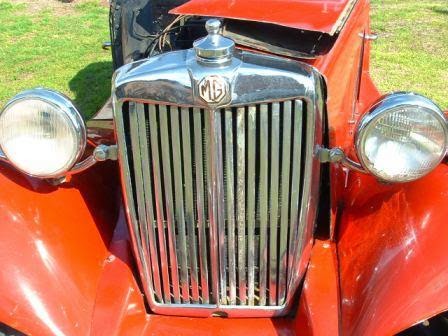
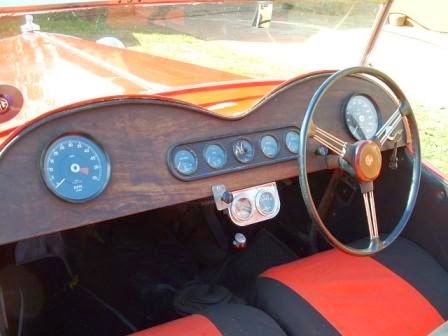
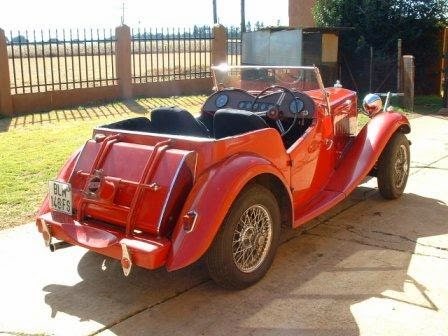
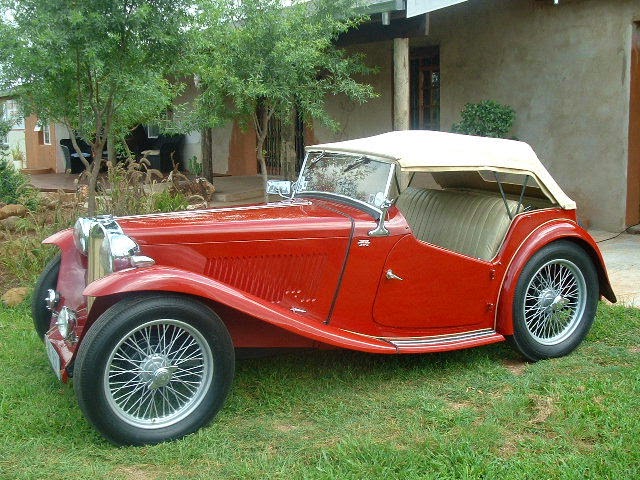
Car of the Month December 2014 is the MG TC/TD/TF

To get back into production quickly after the Second Word War, MG of Abingdon, Oxfordshire, had no option but to warm up its pre-war model, the TB. Thus the TC of 1945 had the same big 19in (48cm) wheels, fold-flat screen, crude semi-elliptic suspension and slab-tank body with ash framing. The body was wider now to give more elbow room for its passengers, while synchromesh on second, third and top gear made it more pleasant to drive. Hydraulic brakes were another welcome improvement.


1949 MG TC

Traditionalists loved it: it was nippy - 78mph (125kph) flat-out - and fun to drive. Nobody seemed to mind the heavy steering and rock-hard suspension. US servicemen stationed in the UK loved them so much they took them home and gave Americans a taste they never lost for European sports cars. Soon the C was spearheading an export drive to the USA - and that's where most of the 10,000-car production run ended up.

Charming as it was, the out-dated TC couldn't go on for ever, so fir 1949 MG introduced the TD: same chassis, same 1250cc four-cylinder engine, but with the new independent front suspension and the rack-and-pinion steering of the YA. Bumpers front and rear and smaller disc wheel didn't do much for the looks, but the TD was roomier and slightly faster, especially in higher compression MKII form from 1952. The TD was a big seller, racking up 29,664 units in its four-year production run.


1954 MG TD

The MG TD MK.II

The final flowering of the traditional MG was the TF of 1953. 

By moulding the headlamps into the front wings, which sloped the grill and fuel tank, Abingdon had gently modernised the shape. Inside, there were individual front seats and a re-styled dashboard. Early cars had the 1250cc engine, but from 1954, a 1500cc unit, giving 63bhp restored some of the performance.

The TF was a holding operation until the MGA appeared The TF looked what it was - warmed-up left-overs - and was really a holding operation while Abingdon prepared its first modern post-war model, the MGA of 1955. Ironically, the TF is the most sought-after of the three "square-rigger" post-war MG's.

MG TC/TD/TF - 1945 - 1955
ENGINE - In-line four
CAPACITY - 1250cc/1466cc
POWER - 54-63bhp
TRANSMISSION - 4-speed manual
TOP SPEED - 78-86mph (125-138kph)
NO. BUILT - 10,000 TC 29,644 TD 9,800 TF

The TD of 1949 was the first MG sports car to have the independent suspension system 

 1954 MG TD - rear

1954 MG TD - grill

1954 MG TD - rear

1954 MG TD - interior

1954 MG TD - interior

1954 MG TD - side view

::

- by Be For

Wednesday, November 19, 2014

Car of the month November 2014 - Rolls Royce


The Cloud had everything the traditional Rolls Royce buyer
could have wanted - except perhaps ultimate power in
Series I form. This is a rare H.J. Mulliner convertible.

The Rolls-Royce Siler Cloud and the virtually identical Bentley S-Type were revealed in 1955. Beautifully proportioned, exquisitely constructed and near-silent in operation, they were everything the traditional Rolls buyer could have hoped for.


This was Crewe's second "standard steel" car after the post-war Dawn and R-Type, with an off-the peg factory body rather than a made-to-measure, hand-crafted aluminium item in the pre-war tradition. Mulliner Park Ward, James Young and others all built exquisite special bodies on this chassis, and there was a long-wheelbase version of the standard body with an extra four inches (10cm) of rear leg room and a division.

Park Ward's famous Chinese Eye Continental, here in convertible form - the ultimate in open car luxury.

The traditional Rolls and Bentley radiator grilles were retained - these and a few badges and items on insignia were the only differences between the two otherwise identical cars. They rode on a substantial, and resolutely separate, traditional box-section chassis with independent front suspension and rear damper rates that could be altered from the driving seat to suit whatever type of road you were thinking of taking your Bentley or Rolls down.

The interior was nothing if not luxurious, with superbly crafted leather seats and a magnificent walnut dashboard.


The engine in the Cloud and S1 was basically the same 4.9-litre power unit carried over from the previous R-Type (and Silver Dawn). except that it had a new aluminium cylinder head and twin SU carburetors.

The Cloud as it appeared in 1955 with single headlights and a six-cylinder engine.
The V-eight Cloud II looked identical.

Transmission at the start offered a choice of either four-speed synchromeshed manual or four-speed Hydramatic automatic, manufactured under licence by Rolls from General Motors in the U.S.A. In fact, after just 18 months, the manual option was dropped and Rolls never encouraged owners to order it anyway. While the engine was incredibly refined, it wasn't really that powerful - the maximum speed was 106mph (170kph). It was Rolls-Royce's policy never to reveal specific power outputs, but the estimated 178bhp had 40cwt (2032kg) to pull along.

For lightness, the body of the Continental models was finished in aluminium;
the factory saloon came in steel only.

To own and drive a Rolls is a satisfying and ethereal experience as long as you don't want blistering performance and can afford the expensive maintenance. These days, it's cheaper to buy, but costly to restore.

The HJ Mulliner convertible, heavier, but just as beautiful as the Continental versions.

ROLLS-ROYCE SILVER CLOUD AND BENTLEY S-SERIES (1959 - 65)
ENGINE : Straight six and V-eight
CAPACITY : 4887/6230cc
  TRANSMISSION :4-speed manual / 4-speed auto
  TOP SPEED :106-116mph (170-186kph)
  NO. BUILT :
  Cloud 1/S1 - 3,107/2,231
  Cloud 2/S2 - 2,417/1,932
  Cloud 3/S3 - 2,044/1,318
  Plus 671 Clouds I, II, III

.

- by Be For

Sunday, July 13, 2014

Almost at the end of winter

The first rains are not far away and farming will soon be starting in all earnest. Tractors are being prepared for serious work and lands are being prepared and ploughed, ready for this season's crops. Those of you who are farmers, may this be a bumper year!

I'm sure all you car enthusiasts have been busy and resourceful in the detail and attention given to your beloved classics over the winter months, and are ready and raring for the coming summer months outings.

Many years ago, in the 1970's, I was at an Austin Healey show day at Patterson Park in Norwood and was impressed with a red Healey 3000 tri-carb on exhibit. My heart raced with excitement and I swore that one day I would own one of those, come what may!

1962 Austin Healey 3000 MKII

A couple of years ago I heard of one of these beauties for sale in Cape Town and without seeing it, bought it over the phone and had it sent up to Jo'burg on a roll-back. You can imagine my anticipation when it arrived a couple of days later - British Racing Green with black Leather and white piping interior - immaculate condition - an ABSOLUTE dream! 

72-spoke chrome wires, detailed engine bay and even a leather Tourneau! Magnificent! Had been a no-expense-spared rebuild back to standard in the U.K. and shipped to Cape Town by the previous owner.


As it came of the roll-back, I fired the motor and boy oh boy! talk about 3 SU growl - the sound is incomparable!

You can imagine that, in 1962, nobody could tune the 3 carbs, so Austin Healey went back to 2 carbs - the E-type proved the rest about 3 carbs.


In my mind, Austin Healey was one of the greatest sports cars ever produced.

Here is a test to find out whether your mission in life is complete.
If you're alive, it isn't.
- Richard Bach

Featured Short Story - (author unknown)

 
The inventor Arthur Davidson, of the Harley Davidson Motorcycle Corporation, died and went to heaven. At the gates, St. Peter told Arthur, "Since you've been such a good man and your motorcycles have changed the world, your reward is that you can hang out with anyone you want in Heaven."

Arthur thought about it for a minute and then said, "I want to hang out with God."

St. Peter took Arthur to the Throne Room, and introduced him to God. Arthur then asked God, "Hey, aren't you the inventor of woman? God said, "Ah, yes…"

"Well, " said Arthur, "professional to professional, you have some major design flaws in your invention :

1) There's too much inconsistency in the front-end protrusion.
2) It chatters constantly at high speeds.
3) Most of the rear ends are too soft and wobble too much.
4) The intake is placed way to close to the exhaust and
5) The maintenance costs are outrageous!"

"Hmmmm, you may have some good points there," replied, God, "hold on."God went to his Celestial super computer, typed in a few words and waited for the results. The computer printed out a small slip of paper and God read it.

"Well, it may be true that my invention is flawed," God said to Arthur, "but according to these numbers, more men are riding my invention than yours!"

The less said about that the better. (Extract from 'The World Encyclopedia of Cars')

Go well everybody and happy motoring!

Till next time, Dave

.

- by Be For

Friday, June 27, 2014

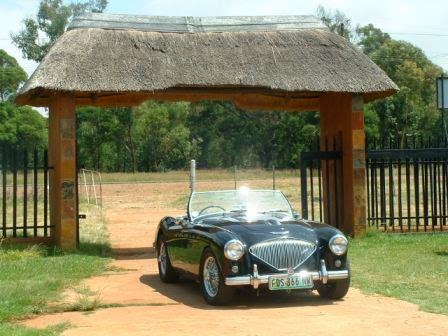
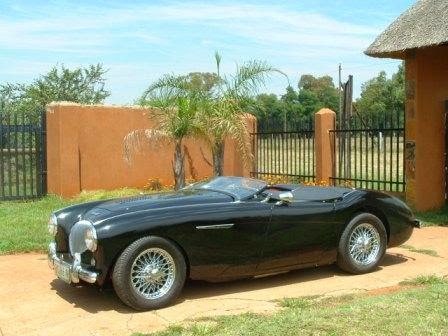
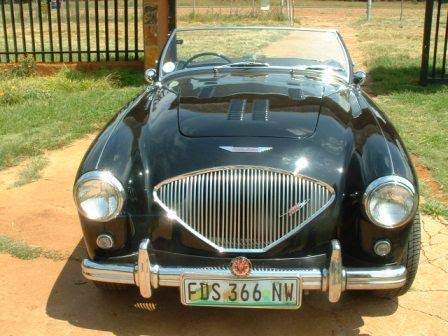
Car of the month - June 2014 - 1953 Austin Healey BN1 100-4 2-seater


After expectantly waiting for 3 weeks for delivery of a 1953 Austin Haley BN1, it finally arrived in all its glory! Black with black leather interior and chrome wire wheels, it's a beaut!

In 1953, this Austin Healey was exported from the factory at Longbridge, Birmingham, UK, to California, USA and was brought back to South Africa in 1985, where it stood in a workshop for 12 years waiting for restoration.

It was bought by a sympathetic enthusiast and lovingly restored to its former glory, finally being finished in 2003 with Black paint and Cherry leather interior, chrome wire wheels and a modern 5-speed gearbox

 It was crowned a Concourse car in its club in Klerksdorp for several years and enjoyed a loving home with several other Austin Healeys, until now finally being acquired by us in March 2009.

Austin Healey with windscreen in normal position

 Austin Healey with windscreen in racing position

1953 Austin Healey Side View

1953 Austin Healey Side/rear view.

1953 Austin Healey grill

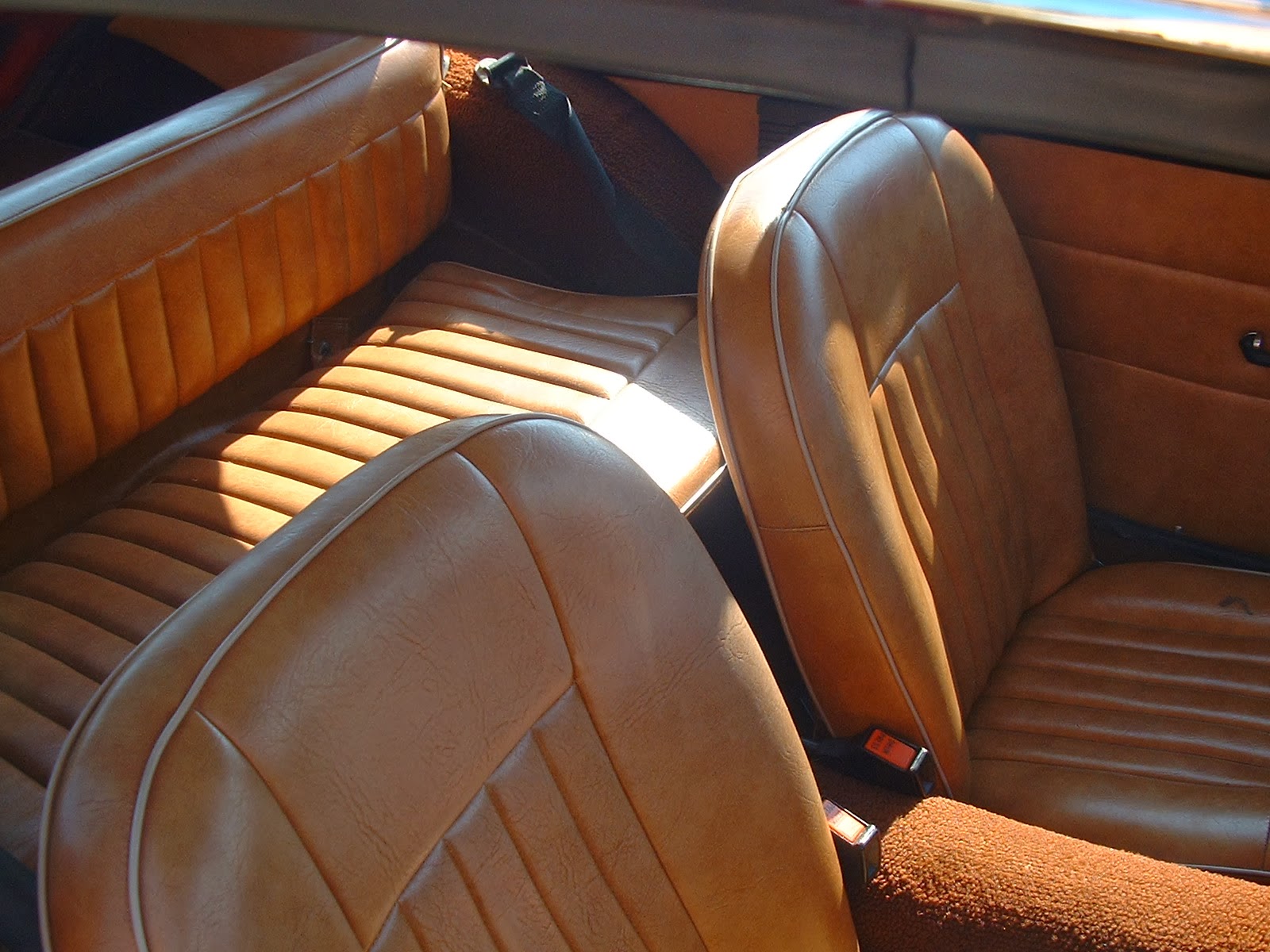
Trying out the seating!

Front view

 Austin Healey Sprite, 1953 Austin Healey BN1 and Tiger Moth

NAME : Austin Healey BN4 (1953-56)
ENGINE : In-line 4
CAPACITY : 2600cc
POWER : 100bhp
TRANSMISSION : 3-speed + over-drive
TOP SPEED : 100mph (160kph)

Production was from 1953 - 1956, when it was replaced by the BN4 100-6.

.

- by Be For

Monday, June 23, 2014

EVOLUTION OF THE CLASSIC CAR MOVEMENT


As the 20th Century drew to a close, we seemed to look back as much as forward, pining for what were, as we see it, better times. We can't revisit our Golden Age, but at least we can own and experience the material objects that evoke it : clothes, music, films, furniture and cars - classic cars. Glamorous, kitsch, humble or high bred, these mobile time warps powerfully conjure up a particular period.

NEW VINTAGE
The hobby of preserving and collecting cars built after the Second World War began to take shape in the early 1970's. Veteran (pre-1905), Edwardian (pre-1919) and Vintage (pre-1931) cars - as defined by Britain's Vintage Sports Car Club - have always been easy enough to categorise, but, by the end of the 1960's, post-war motor cars of the better kind were coming of age. To call them simply "old cars" no longer seemed appropriate : whether beautiful, fast or technically re-eminent, the post-1945 car had at its best all the gravitas of the pre-war machinery. Slowly, quietly, the "new Vintage" had arrived, filling the gap between Vintage and modern for a new generation of enthusiasts.

ABOVE : Classics so evocative as these - the AC Ace, Ferrari 166 and C-Type Jaguar - have always been in strong demand and are priced at a premium. 

One-marque clubs for well-bred sporting marques such as Aston and Bentley had been around for years, but as enthusiasts for the less exalted makes felt the need to huddle together around a common banner, many new guilds and registers sprouted.

Traditionalists had long complained that modern cars all looked the same:, but in the 70's there was a gut feeling that the motor car had seen its best years as safety and pollution regulations made inroads into designers' freedom. Styling, particularly in Britain, seemed to be losing its way.

No wonder older cars began to look increasingly attractive. They were plentiful, cheap, easy to work on and still very usable on increasingly busy roads. Drive an old car and you made a statement about your individualism: you weren't prepared to become just another faceless, sterile tin can on the bypass to oblivion or obsessed with keeping up with the Joneses in the yearly new-model scrum. It all came together in 1973, when a UK magazine, Classic Cars, was launched.


The name "classic" stuck, a useful catch-all term for a sprawling, ill-defined genre that, in just 20 years or so, has blossomed from an eccentric past-time into a multi-million-pound industry. Not much happened for about ten years, until about 1982-83, when the nature of the hobby began to change dramatically. Slowly, under the noses of true enthusiasts, market forces took hold as it dawned on investors that really prime machinery could prove a fine hedge against inflation or an appreciating asset. Suddenly, the market hardened as Americans came to Europe seeking prime collectables.

At first, gilt-edged pre-war hardware - Bentley, Bugatti, etc. - set the pace in auction rooms, but by mid-decade, super cars of the 50's, 60's and 70's were hyped on their coat tails. Once-affordable Ferraris, Astons and Jaguar XK's and E-types became "investor" cars, commodities too expense and precious to be driven (which was rather missing the point).

As the auction houses pulled even bigger numbers, hype went into over-drive. Banks and finance companies offered loans to buy classics. The increasing ranks of classic car magazines bulged with advertising. Enthusiasts' gentle hobby was turned into an ugly, cut-throat brawl driven by greed. Many found themselves with cars that were worth more than their houses, machinery they were now too nervous to use. The boom couldn't last, fortunately. the recession hit in 1989 and demand quickly fell.

A HOBBY AGAIN
Today the market is stable again and most cars are where they could be - with enthusiasts and enthusiastic investors. Rare and high-calibre thoroughbred cars - especially those with a racing pedigree or an interesting history - will always be in strong demand.

Fashion still has its part to play in the lower echelons of the market, but those who bought Citroëns and Jaguars have learnt about the dedication required to run an old car - some went back to their moderns, others caught a life-long bug!

- Extracted from 'The World Encyclopedia of Cars' by Martin Buckley and Chris Rees

.

- by Be For

Wednesday, June 18, 2014

ASTON MARTIN DB4 - 1958-70 (£75,000-1million)

DB4 Drophead or Saloon (Volante)

You had the dinky toy - has the yearning ever gone away? These cars just look better and better with age, but; you'll have to be quick, as prices are climbing to Ferrari 250 levels. You could say the DB4 GT has already got there - one recently sold for £1million.

Why so expensive? Aside from gorgeous looks and aluminium panels lovingly wrapped around a steel frame, there's a home-grown alloy-twin engine, giving DB's true British pedigree.

The DB4/DB4 GT IS THE BEST DRIVER, THE DB5 the best looking, the longer, taller DB6 the 'sensible choice despite being labeled the lardy one - in reality there's only 18kg in it. No power steering or air conditioning as standard in the earlier cars though.

DB5 - immortalised as 007's car, but an ejection seat wasn't standard!

SPECIFICATIONS
ENGINE : 3670-3995cc, six-cylinder dohc
POWER : 240-325bhp
PERFORMANCE : 0-60mph - 8.1sec
TOP SPEED : 141-148mph
FUEL CONSUMPTION : 15mpg

To good motoring!
Dave Clarkson

QUOTE OF THE DAY

PERSISTENCE
The majority of men meet with failure because of their lack of persistence in creating new plans to take the place of those which fail.
 - Napoleon Hill

.

- by Be For

Thursday, June 12, 2014

Car of the Month May 2014 - Triumph Spitfire (1962-80)


Triumph's Spitfire is affordable, pretty, simple and fun, so it doesn't need
to be a road-burner appeal. It can be bought and run cheaply, up-rated
easily and give excellent service.

On sale for almost 20 years, the Spitfire was conceived by Triumph in 1957 as a response to the market for Ford side valve specials and cars like the Standard Ten-based Fairthorpe. BMC brought out the Austin Healey Sprite and MG Midget, but Triumph's foray was delayed by development costs, finally arriving in 1962 with an uprated version of the Herald 1200's 1147cc engine.

The pretty and practical Spitfire offered a decent-sized boot, wind-up windows and a more spacious interior than a Midget. It was one of the most successful shapes from Italian stylist Giovanni Michelotti.

Making use of mainstream Herald componentry, it boasted independent rear suspension and a tiny turning circle. It had a better ride than other small sports cars and, although criticised for a tendency to 'jack up' if the driver lifted mid-corner, it only let go if driven hard. the problem was eradicated with the s[ring spring set-up fitted to MkIV's in 1070, which can be fitted to earlier cars.

Pretty and practical, but the Spitfire can rust in many areas.
Trim is simple and widely available.

Spitfires are great fun on a sunny day and civilised enough in bad weather, especially with the optional hardtop. MkI's am II's are the cutest, MkIII's the most turnable, MkIV's the cheapest and lat 1500's the most practical.

Spitfires out-sold Spridgets throughout and more than 300,000 were built. They were rallied and raced at Le Mans, spawning the fastback GT6. Triumph never built an open GT6, but many have been converted.  If a Spitfire body is fitted to a complete GT6 chassis/running gear, the conversion is successful - fitting GT6 running gear to a Spitfire rarely works as so much must be changed.

Many more Spitfires were sold in the US than the UK, but very few have come back. Emissions equipment took the MkIV 1300 down to 48bhp and US cars used the 1500 engine from 1973.

BODY/CHASSIS
For a restoration project, you should walk away from a car that needs major body work. It costs too much to do it properly. The sills are key to a good restoration, and they are key to a good Spitfire purchase. The sills are structural and are critical to good door fit and consequently also affects the fit of the hood.

Spitfires can rust in many areas, but thankfully most of it is easy to find because of the way these cars are built. Door bottoms rust, as do rear wheel arches as well as the valance below the rear bumper. The optional hard-top is a desirable extra, but check that all fittings are present and look for rust along the front edge and below the windows, especially on MkIV's. The Spitfire chassis rarely suffers any rust, but should still be checked.


ENGINE
The worst engine is the MkIV 1300, though its cylinder head has better porting and bigger valves than the MkIII, which is easily swapped over.

Despite starting life in 1953 with 803cc, the four-cylinder Spitfire engine is robust and dependable. Spitfires never had an oil pressure gauge as standard. If one is fitted, expect 60-75psi at speed when cold, dropping to 40psi when thoroughly hot. A good blast on a motorway is needed before the pressure on a worn engine will drop to around 25psi at speed.

TRANSMISSION
Marks I-III used a three-rail gearbox with synchromesh on the top three gears and optional overdrive; the MkIV added synchro on first (and stronger overdrive in 1974), while the 1500 had a stronger single-rail gearbox (with four synchros and optional overdrive).

Mks I-III used a 4.11:1 Herald-spec differential; MkIV used the 3.89:1 larger flange diff developed for the Vitesse 2-litre, while the 1500 went to 3.7:1.

SUSPENSION
Spitfire suspension is simple and reliable if well maintained, but needs regular attention. You cannot over-lubricate them and neglect leads to rust forming at the top of the thread on the vertical link.

Scruffy interior is inexpensive to refurbish.

INTERIOR TRIM
Spitfire trim is simple and virtually all available. It's vinyl on early cars (with extremely rare leather option), but seats acquired hounds tooth cloth centre panels on 1500's from FH100020. Hoods made on the original tooling are still available for MkIV on, ut Mks I-III hoods vary in quality.

SPITFIRE MKIII 1969
 ENGINE : 1296cc four-cylinder OH valves Twin SU carbs
POWER & TORQUE : 75bhp @ 6000rpm
 TRANSMISSION : Four-speed manual, optional overdrive, rear-wheel drive
 PERFORMANCE : Top speed 95mph, 0-60mph - 12.5sec

WHICH IS WHICH?

SPITFIRE 4
1962-64 - Original 63bhp gave 92mph, with 5.20x13 crossply tyres on 3.5in disc wheels.  From 1964 optional 4.5in wires, overdrive and hardtop.

SPITFIRE 4 MKII
1964-67 - Carpets replace rubber mats, vinyl trim over metal dash, power up to 67bhp, with new camshaft and tubular exhaust manifold.

SPITFIRE MKIII
1967-70 - Re-designed for US bumper legislation: 9in higher in front bumper, one-piece folding hood, wire-spoke Vitesse/TR4 steering wheel, wood-veneer centre dash panel, 1296cc eight-port engine giving 75bhp.

SPITFIRE MKIV
1970-74 - Major re-design by Michelotti cleaned up body styling and modernised interior. Hardtop also re-designed. All synchro gearbox and alternator standard.

SPITFIRE 1500
1974-80 - 1493cc long-stroke engine with 2.5in SU carbs gave 71bhp. Stronger single-rail gearbox plus higher final drive.


Info from 'the World Encyclopedia of Cars' - Martin Buckley and Chris Rees
.

- by Be For

Monday, April 28, 2014

Car of the month April 2014 - Bugatti Type 35B


The Bugatti Type 35B - The rawest thrill that is road-legal - once you've heard the tearing-calico exhaust note that is a blown 35 at full rip, you'll yearn to drive one.

The straight-eight is a cacophony of aural delight, with each sound individually identifiable by its timbre even to the tone-deaf: valves chime, chains sing; revs howl and the b lower shrieks once the car's running past the fouled-plugs stage, and the outside gear-change works as fast as you can move it. this is a Grand Prix racer - 1926 world championship winner - and looks like a million bucks, which is what they cost now!

All Bugattis are handsome, but the 35 is a work of art, the square-cut engine castings contrasting with the elegant arch of the horse-shoe grille, the beautiful detail of the engine-turned dash and zig-zag wired body panels - and the Heath Robinson arrangement of chains, sprockets and cables that constitutes the brake linkages.


Ettore Bugatti ploughed his own furrow through life and that came to making his idiosyncratic automobiles, manifested in the exquisitely sculpted hollow front axle (whose springs pass right through the tube), the cast-alloy wheels with integral iron brake drums, the roller bearings hidden away in the crankcase - and the complex opening arrangements for the three-valve-per-cylinder valve gear. All with no gaskets...

William Grover-Williams' Type 35 beat 15 cars to win the inaugural Monaco Grand Prix in 1929, kicking up dust for a gruelling four hours and 100 laps. It was worth it though... Williams was 100,000 francs better-off - 1000 francs per lap.

BUGATTI TYPE 35B 1924-1929
SPECIFICATIONS
ENGINE - 2262cc Eight-cylinder
POWER - 140 bhp
PERFORMANCE - Top speed : 120mph - 0-60mph : 6sec
FUEL CONSUMPTION - 20mpg

Following the Second World War, Etorre Bugatti's fabulously engineered, but vastly expensive creations, were at odds with the times, and production never really restarted. There were many attempts to revive the name, but none was very convincing - until a man called Roman Artioli stepped into the arena. This canny Italian magnate managed to rekindle the Bugatti magic in spectacular fashion, but ultimately the dream prove over-ambitious and ended in bankruptcy.

THE PLAN WAS GRAND : a state-of-the-art factory was built in northern Italy, industry greats were hired (including Paolo Stanzani as technical director and Marcello Gandini as designer - both of them effectively fired later on), and a brand-new V-twelve engine was created from scratch.

The new BUGATTI EB110 was to be a superlative mid-engined super-car, the sort of car that Ettore would have been making if he were still alive. The EB110 name was chosen as a composite of Ettore Bugatti's initials and the fact that the car was to be launched on the 110th anniversary of his birth.


The aluminium-bodied Bugatti's styling (created by an Italian architect) was dramatic but controversial: the lines were hardly harmonious and the traditional Bugatti horseshoe grille looked almost farcically small on the car's nose. Inside, meanwhile, the lever of finish was superb, and equipment levels were generous, but space was severely limited.

Mechanically, the Bugatti was highly advanced. Its centre-piece was a V-0twelve engine fitted with no less than four turbo-chargers and 60 valves, developing 553bhp. There was a six-speed gearbox mated to a four-wheel-drive system and suspension, which delivered handling akin to a grown-up Lancia Inegrale. Bugatti claimed a top speed of 212mph (341kph) and stated that this was the fastest road car in the world; Jaguar with its XJ220 and McLaren with the F1 might have questioned this, but no one was in any doubt that the Bugatti was an extraordinarily fast and very capable machine. .....

BUGATTI EB110 (1991-95)
SPECIFICATIONS
ENGINE - V-twelve-cylinder
CAPACITY - 3500cc
POWER - 553-611bhp
TRANSMISSION - 6-speed
TOP SPEED - 212-221mph (341-356kph)
NO. BUILT - Not known
Info from 'the World Encyclopedia of Cars' - Martin Buckley and Chris Rees

.
- by Be For

Monday, December 30, 2013

Happy New Year 2014!

1953 Austin Healley BN1 100

2013 has been an amazing year filled with some great motoring, club visits, meeting new motoring enthusiasts and checking out some great cars.

Cheers to 2014 and here's wishing you a wonderful and safe motoring 2014!

.

- by Be For

Wednesday, November 13, 2013

MG

1967 MGB GT

The MG is still one of the most numerically successful sports cars ever built, with more than half a million made between 1962 and its demise in 1980. At the height of its popularity, Abingdon was making more than 50,000 a year.

The main difference between the MGB and its forebear, the A, was in construction; gone was the rugged and heavy separate chassis, replaced by a light unit construction shell. The car appeared originally as an open roadster, with a three-bearing version of the venerable B Series 1798 four-cylinder engine. Torque was its main strong point - 110lb/ft (149.6Nm) at 3000rpm - but on twin SU carburettors its 95bhp at 5400rpm was creditable, if unsensational. Suspension, steering and rear axle cam straight from the BMC parts bin to keep costs down, so there were few technical highlights, but the B was a genuine 100mph (150kph) car with safe, if uninspired, handling.

It was joined in 1965 by the Pininfarina-inspired B GT, with its tail-gate rear doors and occasional rear seat - strictly for children. It was 160lb (72.7kg) heavier than the roadster, but had the fie-bearing engine and quieter rear axle from the start.

1967 MGB GT 

In 1974, MG announced the black bumper cars with grotesque plastic bumpers and increased ride height to keep the aging model legal in North America, where most production will went. Performance was in decline - the GT wouldn't even manage 100mph - and the handling was ruined by its new, taller stance, but the car continued to sell because it was one of few open cars available.

1967 MGB GT rear

There were two rather more exciting versions of this evergreen sports car to come.

The MGC of 1967 was a three-litre version of the B, designed to take the place of the "Big" Healey 3000 models. Bigger 15-inchwheels and a bonnet bulge differentiated the C from the B and, underneath, thee was torsion-bar front suspension rather than wishbones. With a 145bhp six-cylinder engine, the C was certainly fast, but nose-heavy weight distribution spoiled the handling.

Four years later, British Leyland answered calls for a more powerful version of the car with the GT V-eight. With its smooth, quiet and very torquey Rover 3.5 V-eight this was a much better prospect, but yet again success eluded this 125mph (201kph) machine. It didn't look different enough from the stock four-cylinder car, and the critics panned its lack of suspension refinement, the wind noise and its relatively high price.

Few wanted the V-eight in its day - only 2,591 were sold between 1973 and 1976 - but today it is a sought-after and entertaining classic, easily the best B of the lot.

MGB - 1962-80
ENGINE - 4-cylinder
CAPACITY - 1798cc
POWER - 95bhp
TRANSMISSION - 4-speed with over-drive
TOP SPEED - 106mph (170kph)
NO. BUILT - 387,259 MGB's 125,621 GT's

1967 MGB GT interior

1967 MGB GT interior

1967 MGB GT interior- rear

1967 MGB GT interior

1967 MGB GT - rear view

An early MGB on rare disc wheels. the styling was influenced by Pininfarina. 

::
 

- by Be For