Showing posts with label car of the month. Show all posts

Sunday, October 19, 2014

Car of the Month Oct 2014 - MGA


The A was the first modern post-war MG. As the first new MG produced after the merger of Nuffield and Austin, it was also the first to use the corporate mechanical parts: much of the drive train was derived from the Austin A50 saloon. Its pretty pinched-waist body was derived from a special TD raced at Le Mans and was based on an enormously strong box-section chassis. Some said it was too strong and unnecessarily heavy, but it was certainly rigid.

Above : The A was the first modern MG in years. It had very pretty styling and a stiff box-section chassis, the last used on an MG

There was nothing ground-breaking about the suspension, with its front wishbones and leaf-spring rear beam axle, yet the handling of the A was more than a match for its contemporary Triumph and Austin Healey rivals. Bolt-on steel wheels were the standard offering, with centre-lock wires as an option. On 1489cc and 72bhp from its B Series engine, it wasn't wildly quick, but 95mph (152kph) was respectable, as was the potential 3mpg.

It was joined by a handsome coupé version in 1956 and in 1958 by the exciting twin-cam with its Harry Weslake-designed twin overhead-camshaft 1588cc engine. With 108bhp, top speed went up to 110mph (177kph). It was a highly desirable property, but the engine - based on a modified B series block - had a poor reliability record, with a reputation for burning pistons. It was available in coupé and roadster form and could be recognised by its handsome Dunlop centre-lock lightweight steel wheels. Dunlop disc brakes on all wheels were standard. High prices and its dodgy reputation kept sales low. BMC killed this most exotic of MG's in 1960.

Above : The MGA twin-cam was an exotic development using a new double overhead camshaft version of the B Series engine.

By the time, the standard MGA had become the 1600, with 80bhp, disc front brakes and genuine 100mph (160kph) ability. The only outward difference, aside from badging, was the separate rear indicators. Optional was the DeLuxe, with the standard pushrod engine, but the disc brakes and centre-lock wheels of the slow-selling twin-cam.

The final MKII 1600 of 1961 had a slightly bigger bore 1622cc engine, pushing the power output to 86bhp. You can identify a MKII by its recessed front grille and horizontal rear lights.
 
Production finished in 1962, giving way to the unitary MGB, certainly a more modern MG than the A, but not such a pretty one.


NAME : MGA (1955-62)
ENGINE : In-line 4
CAPACITY : 1489/1588/12622cc
POWER : 72-108bhp
TRANSMISSION : 4-Speed
TOP SPEED : 95-110mph (152-277kph)
NO. BUILT : 101,081

.
.

- by Be For

Saturday, September 27, 2014

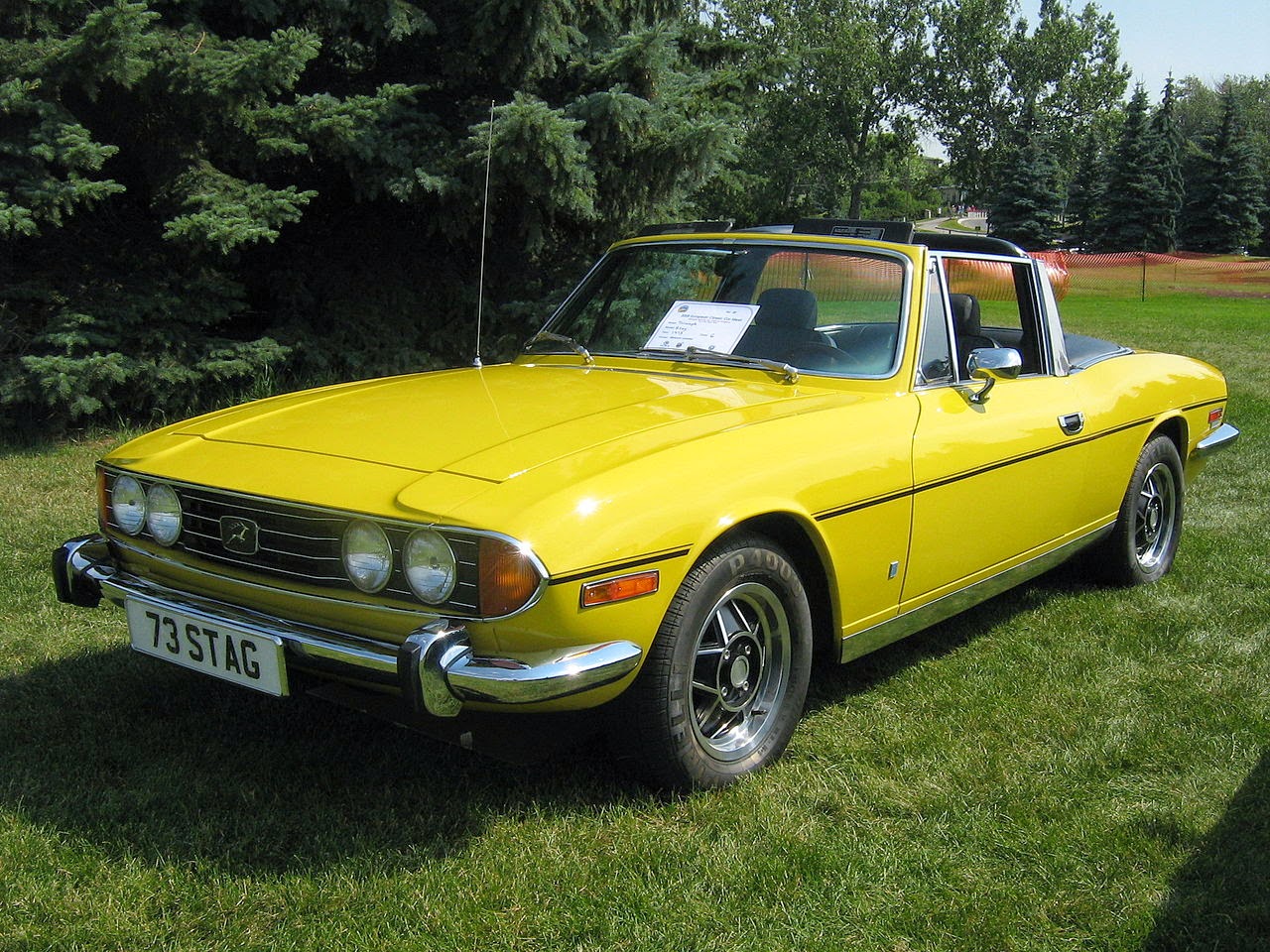
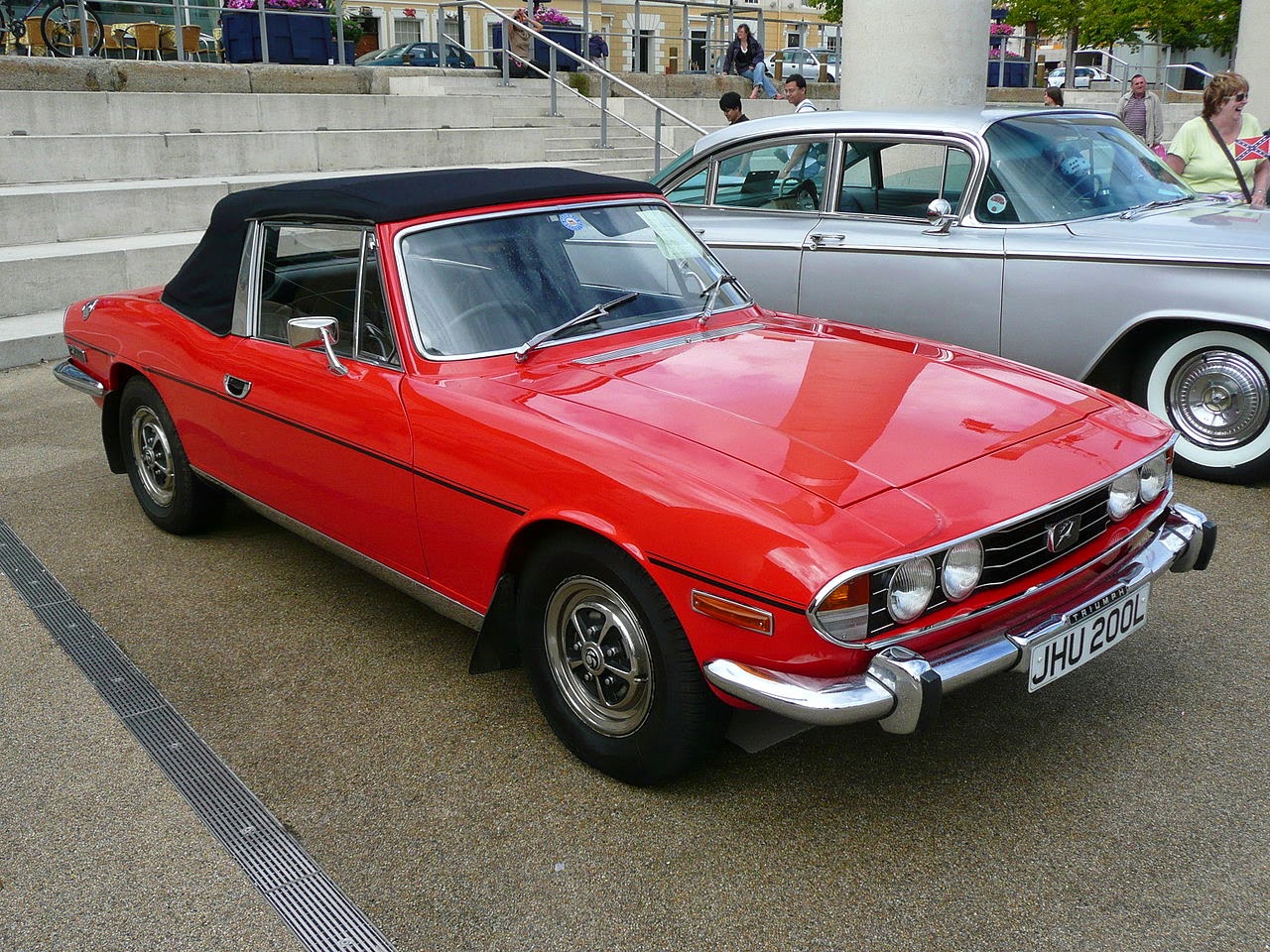
Car of the month Sept 2014 - Triumph Stag


In 1970, Triumph gave the sporting family man the chance to feel the wind in what was left of his hair while his kids created havoc on the back seats. The Michelotti-designed car was equipped with a 3.0-litre V8 engine that developed a reputation for unreliability, with some owners resorting to fitting a Rover V8 unit in its place. 

This conversion is now frowned upon, and to get yourself accepted in Stag circles you'll need an original-engined car rather like this one at Spring Garage, in Leicestershire.

With two owners from new and just under 46,000 miles on the clock, this car looks great and drives brilliantly. The recent respray was carried out when the Carmine Red paint faded, but the panels beneath are original and unwelded.

Inside, the brown vinyl seats and trim are excellent and the multitude of dials and switches work as they should. Of particular interest here, given the engine's notorious reputation for overheating, is the temperature gauge - which remains steady in all driving conditions.
- Ben Field 

Envisioned as a luxury sports car, the Triumph Stag was designed to compete directly with the Mercedes-Benz SL class models. All Stags were four-seater convertible coupés, but for structural rigidity – and to meet new American rollover standards of the time – the Stag required a B-pillar "roll bar" hoop connected to the windscreen frame by a T-bar. A removable hardtop was a popular factory option for the early Stags, and was later supplied as a standard fitment. 

Pic from Wikipedia

PERFORMANCE
Automatic gearbox mutes of-the-line acceleration, but torguey engine delivers plenty of mid-range power once on the move.

HANDLING
Comfortable ride. A little body roll in the corners, but this is more of a tourerthan an out-and-out performance vehicle. Brakes a bit spongy.

ENGINE
Runs smoothly. Oil pressure correct at 45psi. Coolant temperature keeps steady.

TRANSMISSION
Flawless automatic changes enhance the Stag's smooth cruising nature.

STRUCTURE
No welding torch has ever been near this car. Floor pans still have original factory paint on them. Very solid indeed.

BODYWORK
The recent resp0ray is of a very high standard. No signs anywhere of bubbling suggests that the new paint isn't covering up rust.

EXTERIOR TRIM
Chrome work is complete and in very good order. Original wheels have never been kerbed.

INTERIOR
Trim is excellent throughout. All electrical items, including windows, are fully functional.

HISTORY
Service history and many bills from new, including original bill of sale. Thick bundle of MoTs help to verify mileage.

VERDICT
A great example of this popular sports tourer. 

 1972 Stage - pic from Wikipedia

::

- by Be For

Thursday, March 27, 2014

Car of the Month March 2014 MG - TC/TD/TF

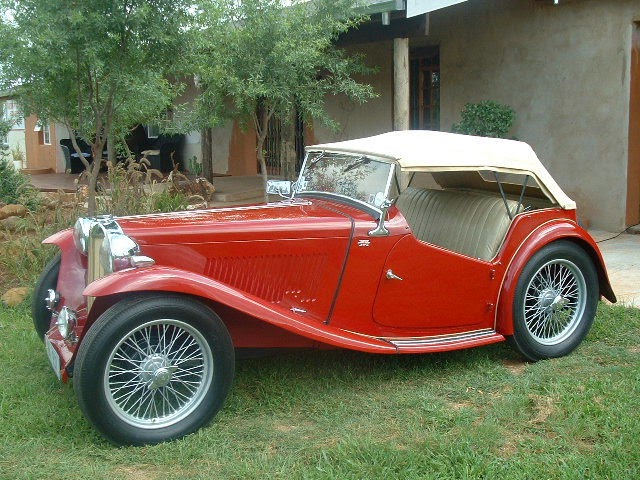
To get back into production quickly after the Second Word War, MG of Abingdon, Oxfordshire, had no option but to warm up its pre-war model, the TB. Thus the TC of 1945 had the same big 19in (48cm) wheels, fold-flat screen, crude semi-elliptic suspension and slab-tank body with ash framing. The body was wider now to give more elbow room for its passengers, while synchromesh on second, third and top gear made it more pleasant to drive. Hydraulic brakes were another welcome improvement.


1949 MG TC 

Traditionalists loved it: it was nippy - 78mph (125kph) flat-out - and fun to drive. Nobody seemed to mind the heavy steering and rock-hard suspension. US servicemen stationed in the UK loved them so much they took them home and gave Americans a taste they never lost for European sports cars. Soon the C was spearheading an export drive to the USA - and that's where most of the 10,000-car production run ended up.

Charming as it was, the out-dated TC couldn't go on for ever, so fir 1949 MG introduced the TD: same chassis, same 1250cc four-cylinder engine, but with the new independent front suspension and the rack-and-pinion steering of the YA. Bumpers front and rear and smaller disc wheel didn't do much for the looks, but the TD was roomier and slightly faster, especially in higher compression MKII form from 1952. The TD was a big seller, racking up 29,664 units in its four-year production run.

1954 MG TD 

The MG TD MK.II 

The final flowering of the traditional MG was the TF of 1953. By moulding the headlamps into the front wings, which sloped the grill and fuel tank, Abingdon had gently modernised the shape. Inside, there were individual front seats and a re-styled dashboard. Early cars had the 1250cc engine, but from 1954, a 1500cc unit, giving 63bhp restored some of the performance.

The TF was a holding operation until the MGA appeared 

The TF looked what it was - warmed-up left-overs - and was really a holding operation while Abingdon prepared its first modern post-war model, the MGA of 1955. Ironically, the TF is the most sought-after of the three "square-rigger" post-war MG's.

MG TC/TD/TF - 1945 - 1955
CAPACITY - 1250cc/1466cc
ENGINE - In-line four
POWER - 54-63bhp
TRANSMISSION - 4-speed manual
TOP SPEED - 78-86mph (125-138kph)
NO. BUILT - 10,000 TC / 29,644 TD / 9,800 TF

The TD of 1949 was the first MG sports car to have the independent suspension system


1954 MG TD rear


1954 MG TD rear
 
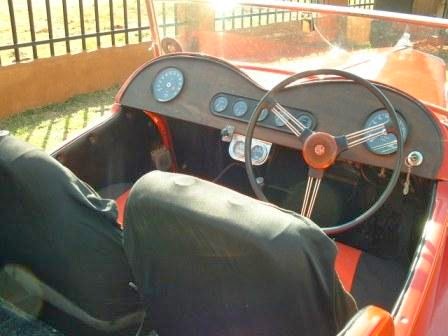
1954 MG TD interior

1954 MG TD grill 

::


- by Be For

Saturday, February 1, 2014

Car of Month Jan 2014 - Austin Healey 3000 MK.III Convertible


The featured CAR OF THE MONTH is the 1965 Austin Healey BJ8, owned by Bruce Leslie and which, as the pictures show, was built up from scratch to being one of the most sought-after collectors’ items in the country. 

Bruce bought the 'car' in April 2003 and completed the restoration in December 2005. It is painted in metallic golden beige, which was a factory colour used from January 1967 to March 1968. It is one of the last 800 cars built.

Some of the original factory specs : 
Make and Model : Austin-Healey 3000 MK.III Convertible
Specification : RH Drive (Home Market)
Colour : Exterior - Black
Trim - Black (Hide)
Hood (top) - Black
Date of Build : 4-10 August 1967
Date of Despatch : 11th August 1967
Destination (Dealer) : Not recorded
Details of Factory fitted Equipment : Wire Wheels, Heater
Adjustable Steering Column, Overdrive
Laminated Windscreen, Black Tonneau Cover

Before 

Before 

Before

Before

After

The original "big" Healy was the Healey 100, first shown at the Earls Court show in 1952 and hastily adopted by BMC as the Austin Healey 100 with 2.6 litre four-cylinder engine from the Austin Atlantic.

In 1956 the six-cylinder BMC series C engine from the Austin Westminster was shoehorned into a stretched version of the car to make the 100/6.

However, this wasn't entirely successful : performance was down compared with the torquey old four. Redemption arrived in the form of the three-litre 3000 MK.I in 1959, outwardly the same pretty car but with 2912cc 124bhp.

For 1961 BMC upped the power to 132bhp with triple SU carburettors for the MK.II 3000, followed a year later by the MK.IIa with wind-up windows, a curved windscreen and a proper, fully convertible hood.

Last, and best of the line, was the 1964 MK.III with improved breathing for 148bhp, pushing the top speed to over 120mph (193kph). Brakes were improved by a servo and, inside, the car had a rather opulent wooden dashboard, somewhat at odds with its macho reputation as a rugged driver's car. .........

It remains one of the most sought-after British sports cars of the 1960's.

.

- by Be For